Astronomy Research
Rachael’s research broadly focused on three main topics.
1. Stellar Heterogeneity
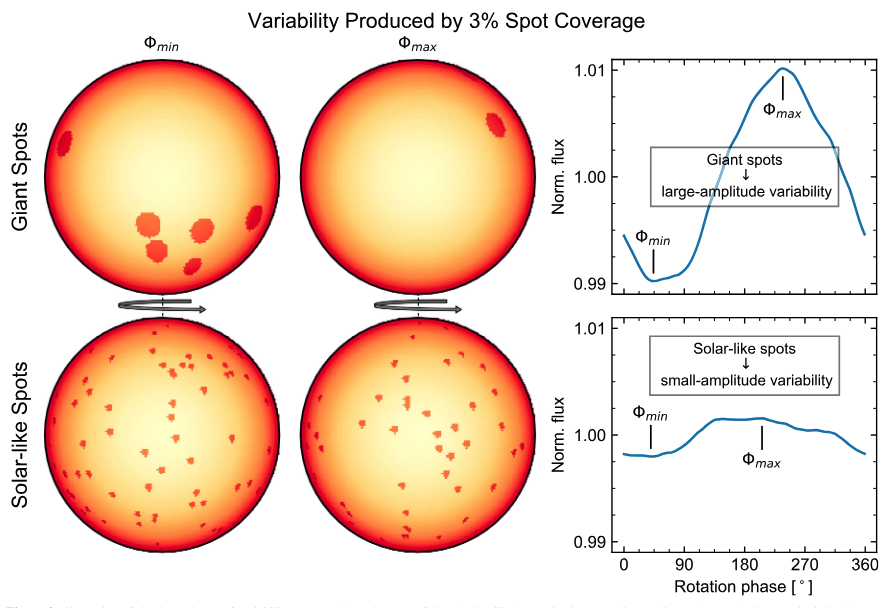
Understanding Stellar Heterogeneity enables more precise Exoplanet Characterization
As studies of exoplanets becomes more advanced, the signals we are analyzing have gotten incredibly small. So small that they near or at the same magnitude as signals from the host star. Thus, it is imperative that we develop a framework for disentangling the signals between host star and exoplanet.
The Stellar Treasure Trove: Going through all archival HST observations of transiting exoplanets, re-reducing the data with updated methods, gaining more information about the Out-of-Transit stellar spectra and characterizing the intrinsic stellar variability — a previously ignored phenomenon.
2. Irradiated Brown Dwarfs
PhD Thesis Title— Illuminating Brown Dwarfs: Exploring the Impact of Irradiation in Ultracool Atmospheres Through Phase-Resolved Spectroscopy

Atmospheric Characterization of Irradiated Brown Dwarfs helps us understand all atmospheres
For her PhD thesis, Rachael studied atmospheres of brown dwarfs in ultra-short period white dwarf-brown dwarf binaries. These highly irradiated yet ultracool atmospheres enabled Rachael and her team to test the presence of predicted condensate cloud formation, study day-night heat redistribution in unprecedented detail, and build an observational link between field brown dwarf and hot Jupiter studies.
Watch the video abstract for the 1st paper in this project:
Video Abstract for article titled “Hotter Than Expected: HST/WFC3 Phase-resolved Spectroscopy of a Rare Irradiated Brown Dwarf with Strong Internal Heat Flux”. Accepted for publication in February 2023 in The Astrophysical Journal.
3. Type Ia Supernovae
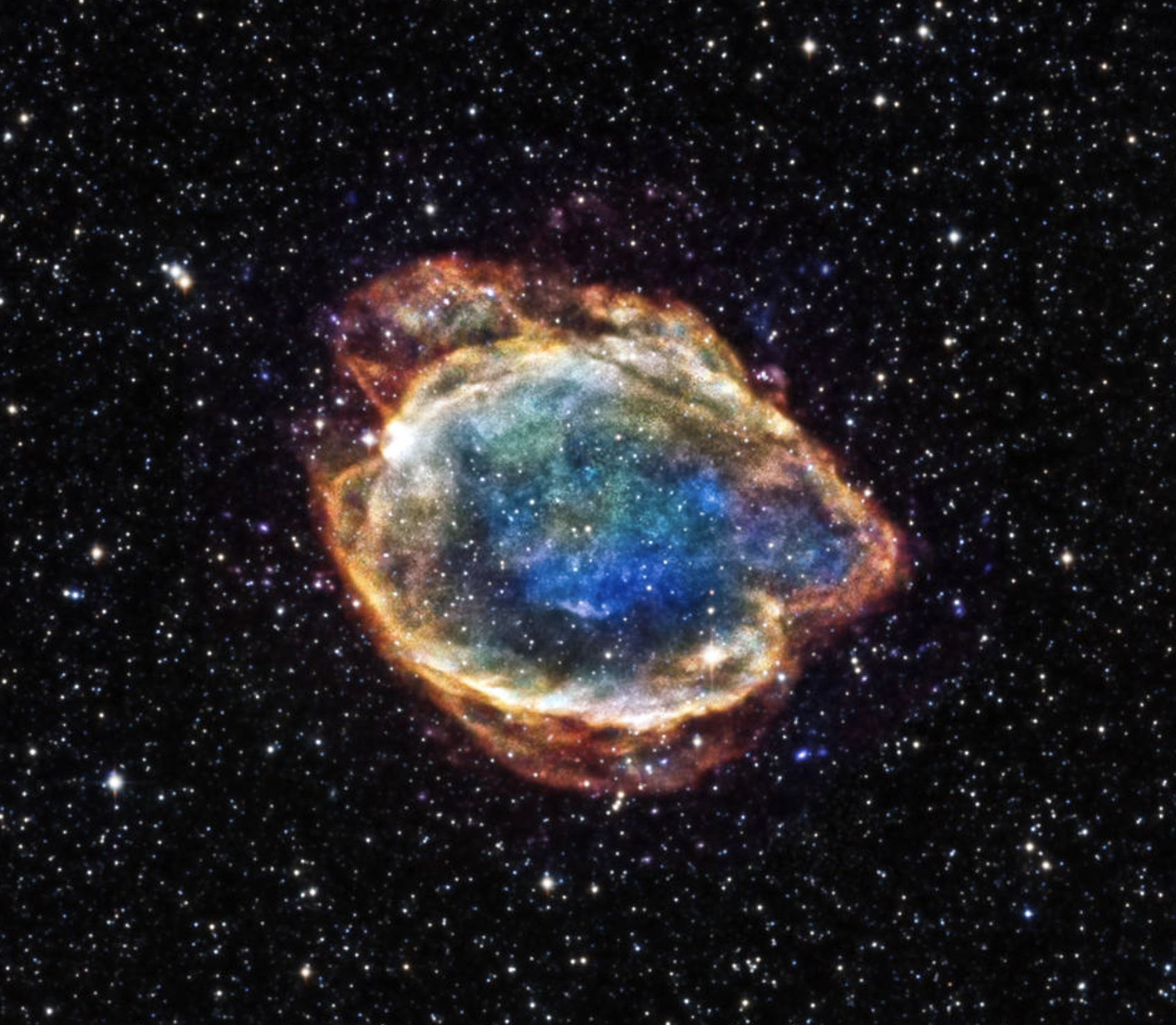
Constraining the Single Degenerate Scenario: Connecting Early Light Curve Clues with H/He Upper Limits from Nebular Spectra.
For the 3 years of graduate school, Rachael studied the chemical makeup of Type Ia Supernovae explosions. These supernovae are vitally important to Astronomy, yet we still don’t know what exactly causes the carbon-oxygen white dwarf to explode or even how the explosion unfolds. Her research focused on connecting observational clues between the first hours after explosion and the explosion site after ~200 days.